Knife Handle Materials, Edge Geometry, Carry & Maintenance Guide
Knife Handle Materials, Edge Geometry, Carry & Maintenance Guide
Choosing the right automatic or OTF knife isn’t just about blade steel. Handle material, edge grind, carry configuration, and maintenance habits all directly affect how a knife performs, feels, and lasts. This guide covers everything you need to know beyond the blade.
Handle Materials
The handle is your primary contact point with the knife. It determines grip security, overall weight, durability, and feel in hand. Here’s how the most common materials compare.
G-10
G-10 is a fiberglass-reinforced laminate and the most common handle material in premium tactical and automatic knives. It is lightweight, extremely strong, impervious to moisture, and highly texturable for grip. Textured G-10 provides excellent purchase even with wet or gloved hands. A top-tier choice for utility and hard use.
- Weight: Light
- Grip: Excellent when textured
- Durability: Outstanding
- Cost: Mid-range
- Found in: Microtech, Benchmade, Heretic, Protech
Aluminum (Anodized or Hard-Coat)
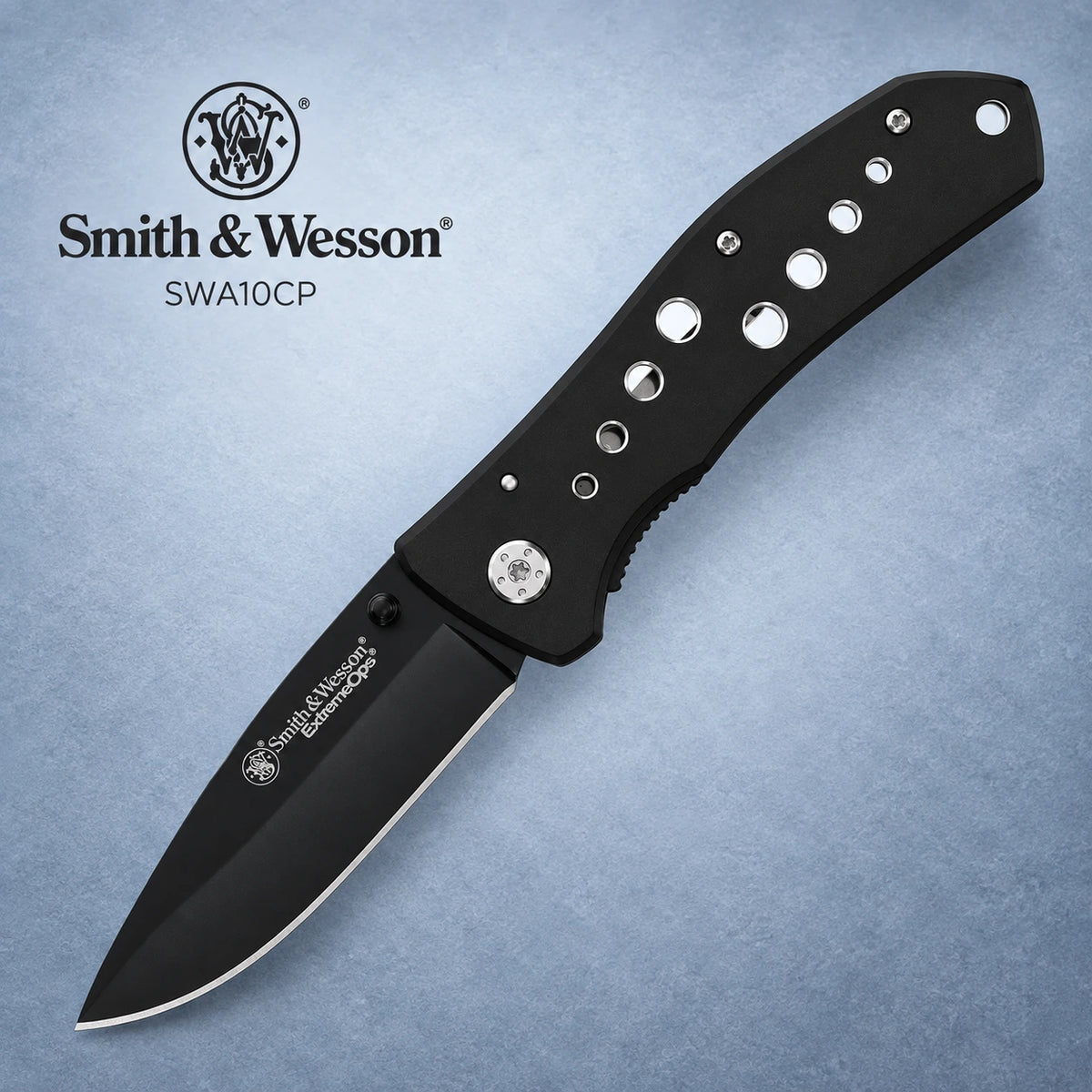
Aluminum handles are the most common material in premium OTF knives. Anodized aluminum is lightweight, available in a wide range of colors, and holds up well to daily carry. Hard-coat anodizing adds a more durable surface layer. The downside: aluminum can feel slippery when wet unless heavily textured or milled.
- Weight: Light to moderate
- Grip: Good (texture-dependent)
- Durability: Very good
- Cost: Mid-range
- Found in: Microtech (most models), Heretic, Piranha, Benchmade Infidel
Carbon Fiber
Carbon fiber delivers the best strength-to-weight ratio of any handle material. It’s extremely rigid, lightweight, and visually striking. The woven pattern is a hallmark of premium and collector-grade knives. Cost is higher due to material and machining complexity.
- Weight: Very light
- Grip: Moderate (typically smooth-faced)
- Durability: Excellent in compression, can crack under lateral impact
- Cost: Premium
- Found in: Select Microtech, Benchmade Gold Class, Heretic custom variants
Titanium
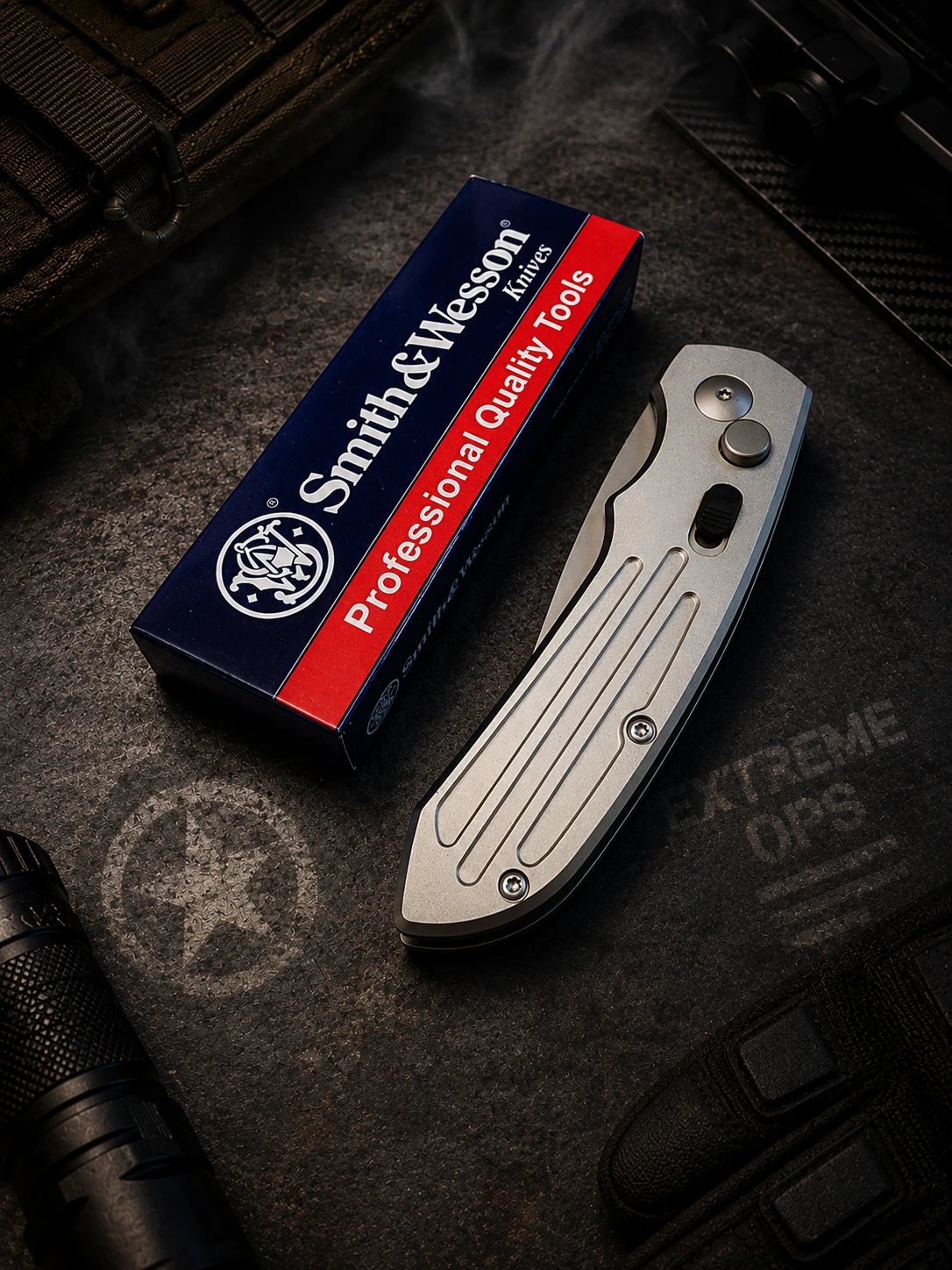
Titanium handles are the pinnacle of knife handle materials — corrosion-proof, extremely strong, and with a distinctive weight and feel. Titanium frame locks are preferred by serious folder users for their structural integrity. The cost premium is significant, and titanium is most common in high-end custom and semi-custom production knives.
- Weight: Moderate (heavier than aluminum but lighter than steel)
- Grip: Good (improves with stonewash or texture)
- Durability: Outstanding — essentially corrosion-proof
- Cost: High
- Found in: Select Protech, Benchmade Gold Class, custom variants
Edge Grind Types
The edge grind determines how a knife cuts, how easily it’s sharpened, and how durable the edge is under different tasks. Most automatic and OTF knives ship with one of three primary grinds.
Flat Grind
The blade tapers evenly from the spine to the edge in a flat plane. Flat grinds are versatile, easy to sharpen, and suitable for most cutting tasks. They’re the most common grind on quality production knives and offer an excellent balance of slicing performance and edge durability.
Best for: General EDC, food prep, utility cutting, users who sharpen their own knives.
Hollow Grind
The blade is ground with a concave curve, creating a thinner edge geometry that excels at slicing. Hollow grinds cut with less resistance than flat grinds but can be more prone to chipping under lateral stress or hard use. Common on stilettos and slicing-focused blades.
Best for: Slicing tasks, precision cutting, stiletto-style automatics.
Tanto Grind
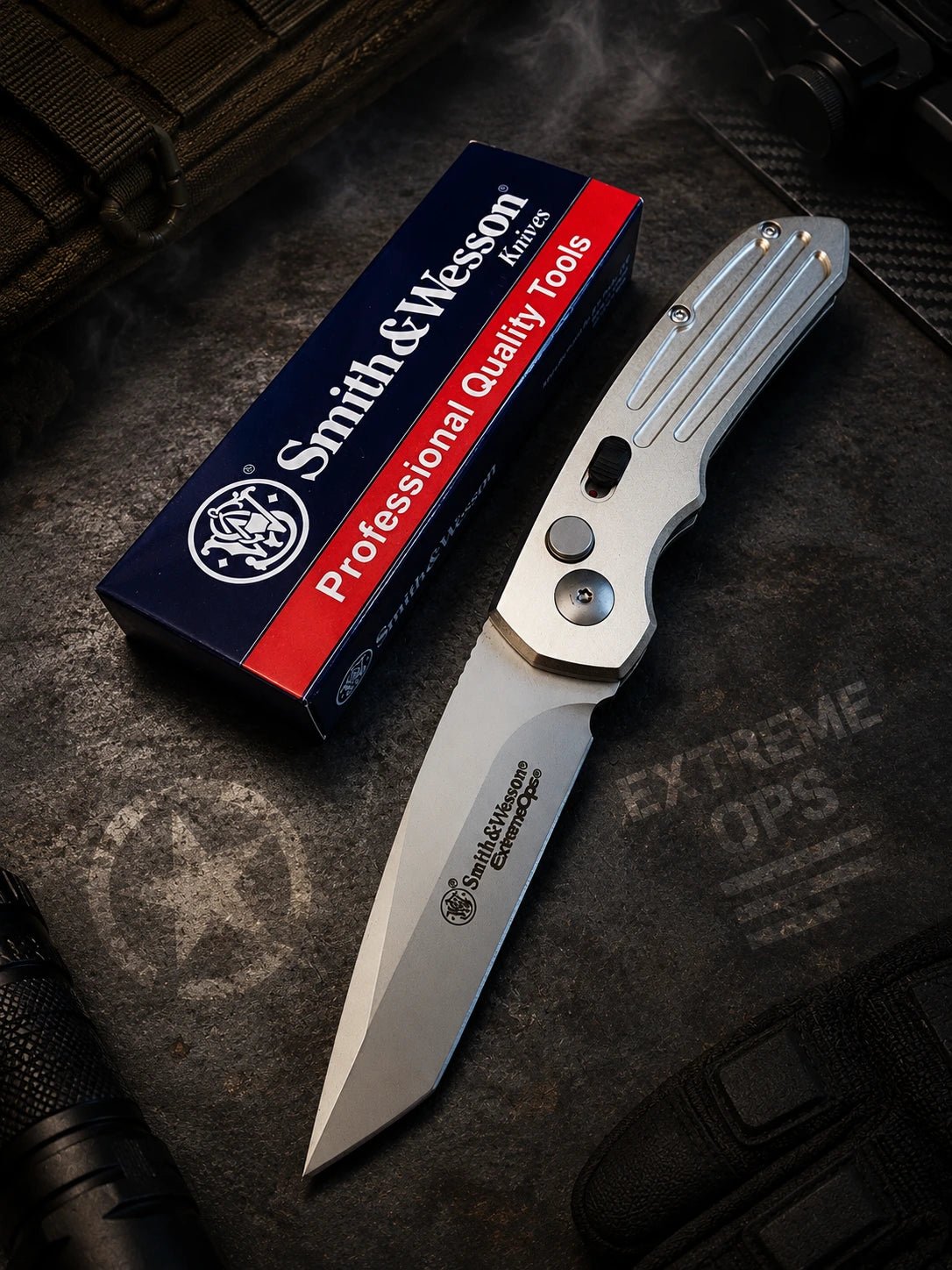
Tanto blades have an angular secondary tip point that reinforces the tip geometry for piercing and prying resistance. The sacrificed belly limits slicing performance, but the reinforced tip is among the most durable of any blade shape. Popular in tactical and hard-use automatics.
Best for: Piercing, tip-heavy work, tactical use, users who prioritize tip strength.
Serrated & Partial Serrations
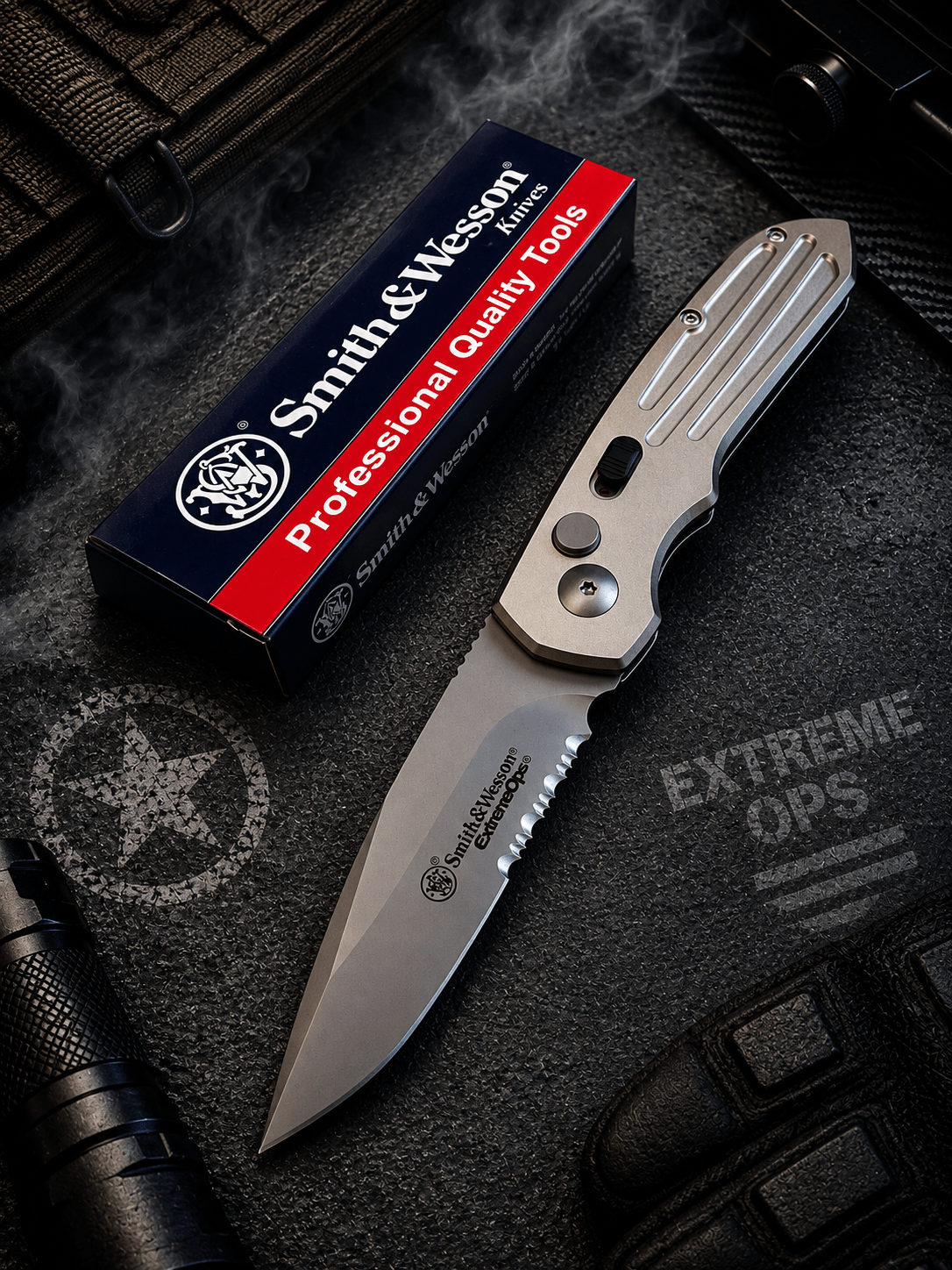
Serrated edges excel at cutting rope, webbing, seatbelts, and fibrous materials. Fully serrated blades are harder to sharpen but highly effective for utility cutting. Partially serrated (combo) blades offer a plain edge section for precision and a serrated section for utility.
Best for: Rescue, utility, cutting cord or straps, outdoor use.
Pocket Clip & Carry Configuration
Most premium automatics ship with a tip-up, reversible pocket clip. Here’s what to know when evaluating carry options.
Tip-Up vs Tip-Down
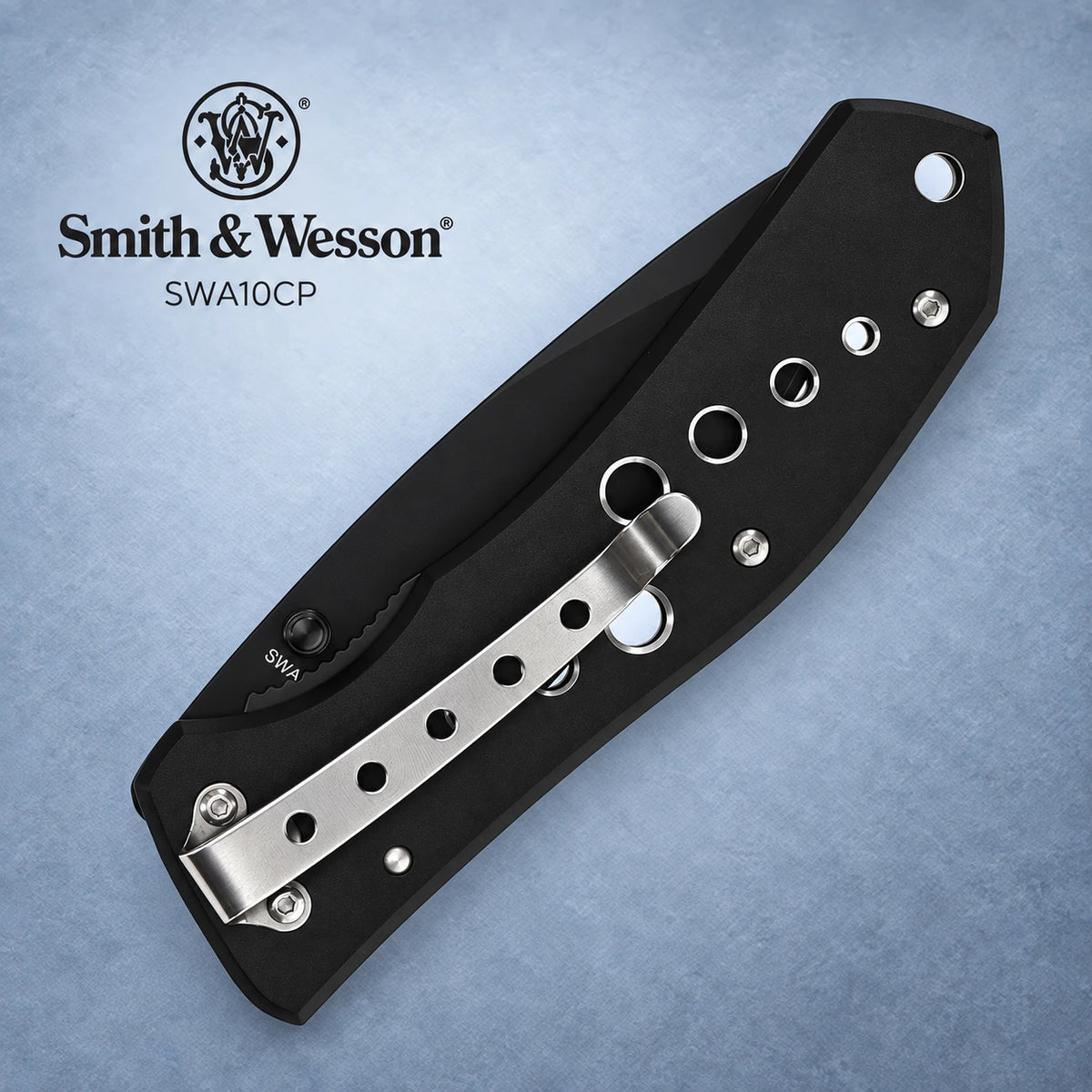
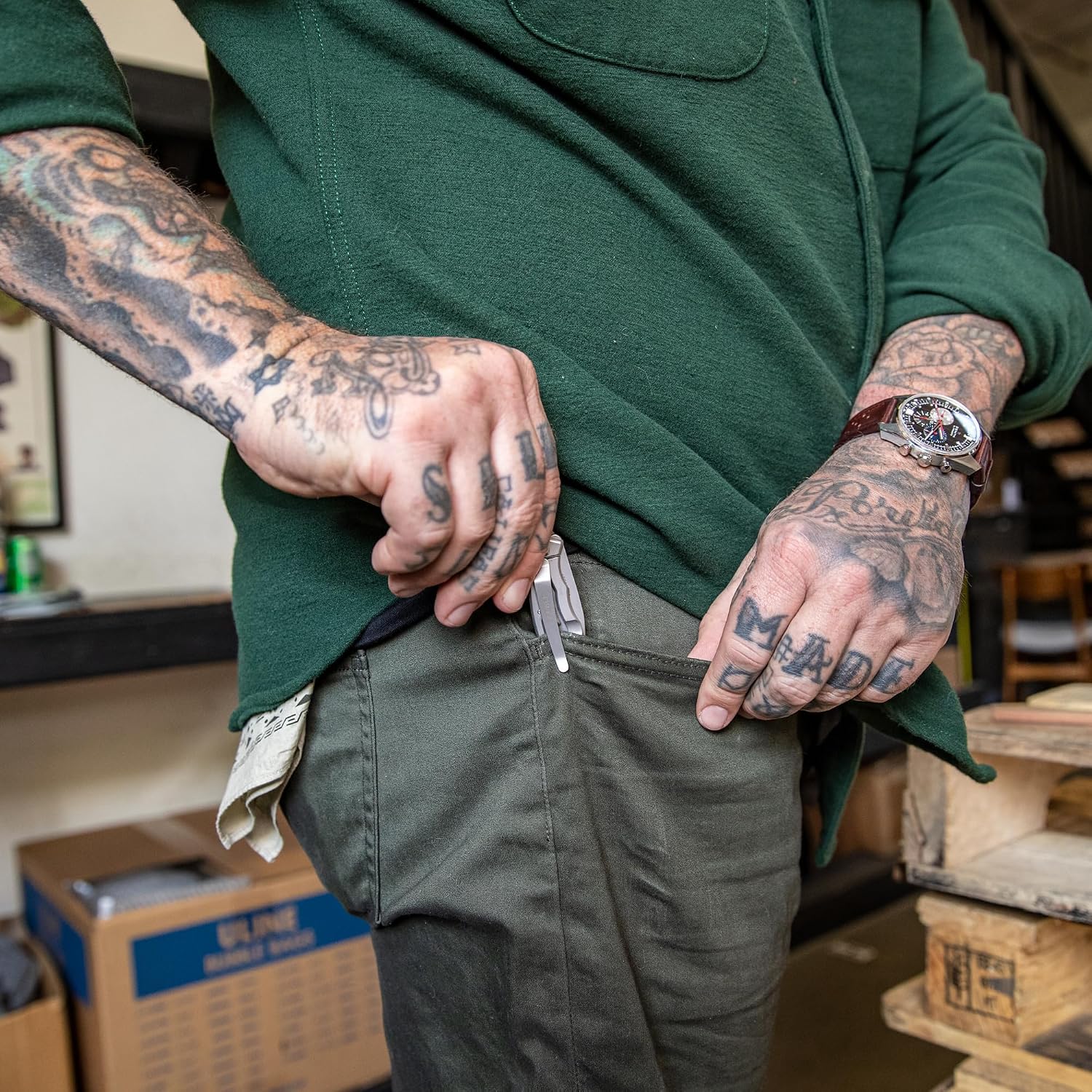
Tip-up carry positions the blade end toward the top of the pocket, allowing a more natural draw and immediate deployment. Most automatic knives default to tip-up. Tip-down carry positions the handle toward the top — preferred by some users for concealment and safety. Many knives offer both configurations via reversible clip hardware.
Deep-Carry Clips
Stock clips on most production knives leave a significant portion of the handle exposed above the pocket line. Aftermarket deep-carry clips (available from makers like Lynch Northwest, Flytanium, and MXG Gear) drop the knife much lower into the pocket, dramatically reducing visible print. Highly recommended for discreet daily carry.
Left/Right Reversibility
Most quality automatic folders and OTF knives feature a reversible clip for left- or right-hand carry. Check the product spec sheet before purchasing if hand orientation matters to your carry setup.
Knife Maintenance: OTF & Automatic Folders
Proper maintenance extends the life of any automatic knife — and is especially important for OTF knives, which have more internal moving parts than a standard folder.
General Maintenance (All Automatic Knives)
- Wipe the blade dry after every use — especially with D2 and other semi-stainless steels
- Apply a light coat of blade oil periodically — mineral oil, Microtech blade oil, or Benchmade Blue Lube all work well
- Clean the pivot area on automatic folders — debris in the pivot reduces spring tension over time
- Avoid submerging automatic knives — water intrusion in spring mechanisms can cause corrosion and spring fatigue
- Store in a dry environment — avoid leather sheaths for long-term storage as leather retains moisture
OTF-Specific Maintenance
- Lubricate the blade channel — apply a small amount of light oil (PTFE-based or Microtech’s own oil) to the internal channel every 3–6 months or after heavy use
- Keep the channel clear of debris — lint, grit, and pocket debris are the #1 cause of sluggish OTF deployment; a compressed air blast clears most buildup
- Check the actuator travel regularly — any stiffness or inconsistency in the actuator slide is usually a lubrication issue, not a mechanical failure
- Do not force a stuck blade — if the blade won’t deploy or retract, do not force it; contact the manufacturer’s warranty/repair service
- Microtech service: Microtech offers factory servicing for their knives. If action degrades significantly, send it in rather than disassembling it yourself, which can void the warranty
Sharpening
Match your sharpening equipment to your steel. 154CM and D2 sharpen well on quality diamond or ceramic stones. S30V and M390/20CV benefit from diamond or high-grit ceramic abrasives — standard whetstones will work but require more time and passes. For OTF knives, maintain a consistent edge angle (typically 20–22 degrees per side) to preserve the factory geometry.
Legal Reminder
Automatic knife ownership, purchase, carry, and transport laws vary significantly by state, county, and municipality. Always confirm current applicable laws in your jurisdiction before ordering, carrying, or transporting any automatic knife. Southern Sporting Goods LLC assumes no liability for unlawful purchase, possession, or use of any product.
Explore More Models